
Conference of Southern Graduate Schools
A Regional Affiliate of the Council of Graduate Schools
2026 CSGS Award Winners
We will celebrate these outstanding students and faculty at the Awards Luncheon in Baton Rouge.
Master's Thesis Award Winner - Derek Koehl
The University of Alabama in Huntsville
Derek Koehl is a Ph.D. candidate in Applied Experimental Psychology and a lecturer in Interdisciplinary Studies at The University of Alabama in Huntsville, specializing in human-AI interaction, trust in automation, and the intersection of cognitive science and artificial intelligence. Their research has been featured in the annual meeting of the Human Factors and Ergonomics Society and presented at conferences including the IEEE International Geoscience and Remote Sensing Symposium, the American Geophysical Union, the European Geosciences Union, and the American Meteorological Society, focusing on AI natural language processing, linguistic modeling, and knowledge graphs. Koehl is the co-developer of the Linguistic Fingerprint, a technology for detecting latent constructs like trust in natural language. Their interdisciplinary work bridges psychology, artificial intelligence, and human factors, advancing theoretical frameworks and real-world applications.

Master's Thesis Award Winner - Hadi Asgharpour
The University of Texas at Dallas
Hadi Asgharpour is an interdisciplinary artist from Iran based in Dallas, Texas. He holds an MFA in Art, Technology, and Emerging Communication and is currently pursuing a PhD in Visual and Performing Arts at the University of Texas at Dallas. His practice examines ecological crisis and the entangled relationship between humans and the natural environment. Working across interactive installation, sculpture, and digital media, he creates multisensory experiences that invite reflection on deforestation, water scarcity, pollution, and overfishing. By combining traditional materials with emerging technologies, his work offers poetic, participatory encounters that foster empathy and ecological awareness. His work has been exhibited internationally, including in Italy, Brazil, and the Netherlands, and has been shown at the Ulrich Museum of Art and the Amarillo Museum of Art.
Master's Thesis Award Winner - Siddhika Gamare
University of Georgia
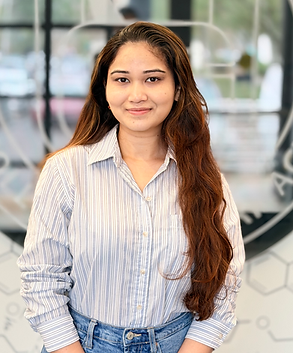
Siddhika Gamare is a PhD student in Clinical and Experimental Therapeutics at the University of Georgia. She earned her Master's degree in Clinical and Experimental Therapeutics, with prior training in Clinical Research and Chemistry. Her research interests focus on understanding the molecular mechanisms underlying human disease, with an emphasis on translational and therapeutic relevance. Siddhika’s master's thesis investigated the role of CYP1B1 in cigarette smoke exposure–induced lipid accumulation in alveolar type II epithelial cells, providing insight into mechanisms contributing to chronic obstructive pulmonary disease (COPD). Ms. Gamare’s thesis findings were recently published in The FASEB Journal. Building on this background in lipid dysregulation and oxidative stress, Siddhika’s doctoral research now focuses on the molecular mechanisms driving atherosclerosis and plaque instability, with the goal of identifying innovative therapeutic approaches.
Outstanding Contribution to Graduate Education - Dr. RaJade M. Berry-James
Virginia Commonwealth University
Dr. RaJade M. Berry-James, Ph.D., is the Senior Associate Dean of Faculty and Academic Affairs at VCU L. Douglas Wilder School of Government and Public Affairs and tenured Professor of Public Administration. She is a renowned scholar and researcher with expertise in public administration. Dr. Berry-James has spent her career in public higher education, serving as Chair of the Faculty, MPA Program Coordinator, Doctoral Program Coordinator, and Director of Graduate Programs for small, large, and research-intensive graduate programs, in addition to her faculty roles.
Dr. Berry-James’ research, teaching, and community engagement are firmly rooted in a commitment to advancing graduate education and the practical application of public administration. Throughout her career spanning several decades, she has earned a distinguished reputation for actively involving graduate students in innovative research initiatives. By securing significant contracts and grants, she has not only advanced her field but also created invaluable opportunities for her students to engage in meaningful work.
Dr. Berry-James’ evaluation research focuses on federally funded programs and community-based initiatives, demonstrating her dedication to impactful scholarship. Her work has been supported by prestigious organizations, including the W. K. Kellogg Foundation, the U.S. Department of Health and Human Services, SAMHSA, and the Office of National Drug Control Policy, among others. Through these collaborations, she fosters a rich environment for graduate students, empowering them to develop their skills and contribute to essential community solutions.
Dr. Berry-James earned her bachelor's degree in Business Administration from Rider University in 1987. She then pursued a Master of Public Administration (MPA) from Kean University in 1993, during which she wrote a compelling thesis titled The Doctrine of Comparable Worth: Beyond Equal Pay for Equal Work, exploring pay disparities between female- and male-dominated positions in higher education. In 1999, she made history as the first African American to earn a Ph.D. in Public Administration from Rutgers University - Newark's School of Public Affairs and Administration, where she specialized in productive public management. Her dissertation, Implementing Affirmative Action: The Critical Role of Affirmative Action Officers in Higher Education, investigated the factors influencing the effectiveness of affirmative action programs within academic institutions.

Outstanding Mentor Award - Nils Peterson
North Carolina State University
Nils Peterson is a Professor of Fisheries, Wildlife, and Conservation Biology at North Carolina State University. He received his B.S. and M.S. degrees from Texas A&M University, and his Ph.D. from Michigan State University. He serves as the Director of Graduate Programs for the Fisheries, Wildlife, and Conservation Biology Program at North Carolina State University. His mentoring, teaching and research are predicated on the belief that human quality of life emerges in a relationship with the environments we inhabit, and that protecting and restoring those environments is one of our greatest opportunities. All his research fits under the broad umbrella of understanding the drivers of environmental behavior. Additional information about his research, teaching, and mentoring activities is available on his webpage and Google Scholar Profile.